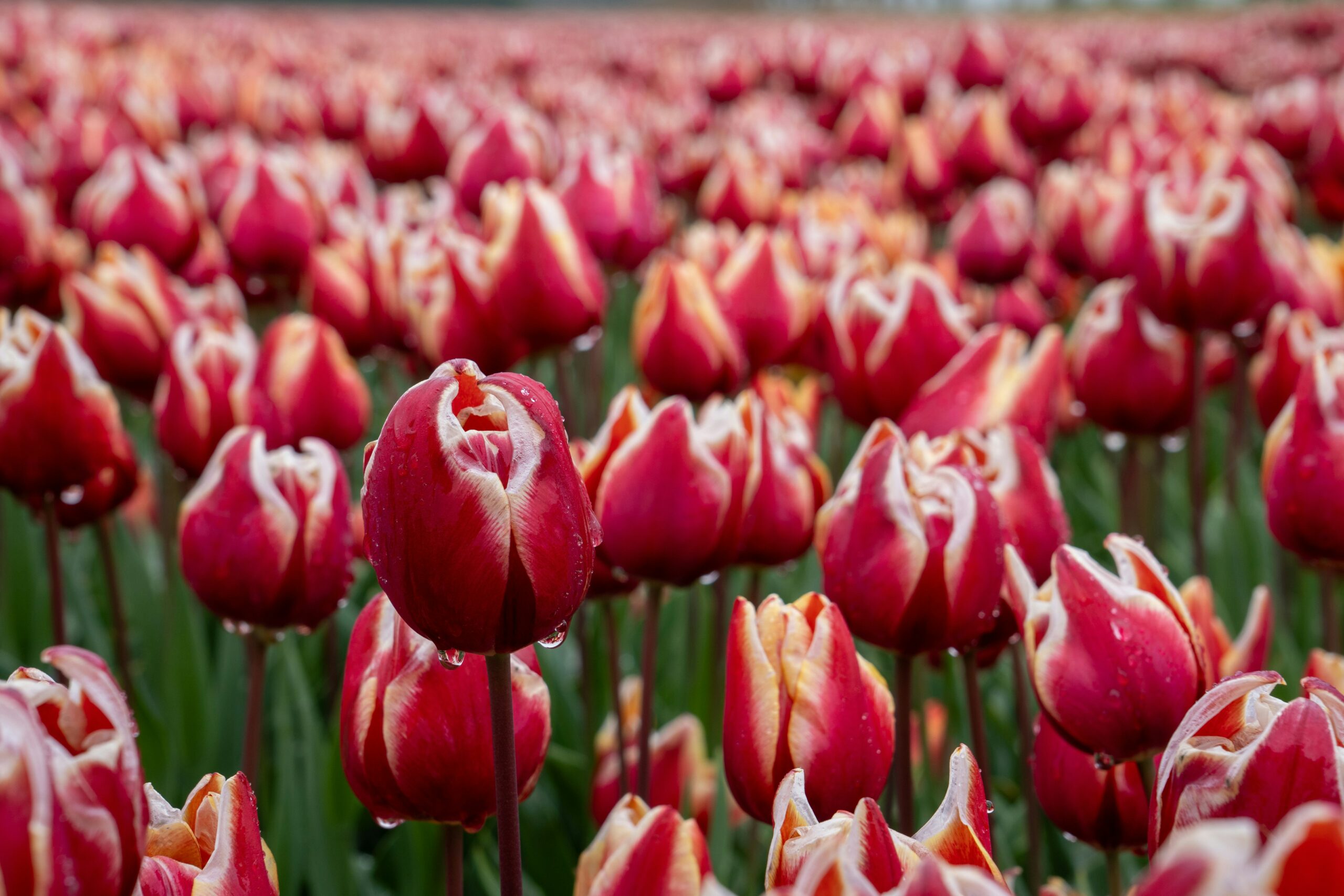
The iconic tulip, a flower synonymous with spring renewal, represents far more than natural elegance; it embodies centuries of global horticulture, careful cultivation, and advanced breeding expertise. From its rugged Central Asian birthplace to the meticulously engineered Dutch fields, the pursuit of the flawless bloom drives a vast international network of growers who blend scientific precision with historical tradition.
A truly coveted tulip is a horticultural triumph, valued not just for its rich color and symmetry but for the robust consistency achieved through decades of refinement. Producing these high-quality flowers demands not only the right climate—requiring critical cold dormancy followed by spring warmth—but also meticulous timing in planting, harvesting, and storage, placing precision and patience at the core of the specialized trade.
The Foundation: Central Asia and Turkey
While the Netherlands dominates the market, the tulip’s genetic and cultural roots lie in Central Asia and the former Ottoman Empire. Wild tulips first flourished across the mountainous steppes of Uzbekistan, Kazakhstan, and Kyrgyzstan. This botanical richness provided the foundational genetic material for every cultivar developed since.
In Turkey, particularly under the Ottoman Empire, the tulip was elevated from a wildflower to a cultural icon, inspiring art and festivals centuries before reaching European shores. Today, Turkish growers focus on maintaining these heritage varieties, ensuring the preservation of unique forms and colors that carry historical authenticity prized by collectors.
The Epicenter: Dutch Mastery of Horticulture
The Netherlands remains the unequivocal global capital of tulip production. Leveraging fertile lowland soils and advanced cultivation technologies, Dutch growers transformed the flower into an industrialized commodity. From the notorious 17th-century Tulip Mania to today’s multi-billion-bulb industry, the nation is the engine of innovation.
Dutch nurseries specialize in hybridization, producing the extensive array of colors, forms, and patterns—including fringed and parrot tulips—that are distributed globally via high-volume auction houses. Their methodology combines cold stratification techniques with intensive field management to guarantee structural strength and consistent uniformity, meeting demanding global commercial standards.
North American Innovation and Resilience
Across the Atlantic, growers in regions like the Pacific Northwest and Michigan have carved out a significant niche, focusing on adapting tulips for the cut-flower market and large-scale landscaping. North American operations prioritize resilience, developing climate-adapted varieties and hybrids resistant to common diseases.
These growers are at the forefront of combining high aesthetic value with reliability, utilizing advanced greenhouse and proprietary bulb propagation techniques to ensure consistent availability, catering to both florists demanding peak performance and gardeners facing regional climate extremes.
The Ethics of the Bloom
The modern value of a tulip increasingly depends not only on its aesthetic quality but also on its origin and the practices used in its cultivation. Large-scale bulb production is resource-intensive, prompting leading Dutch and North American growers to implement sustainable practices. These include careful water management, specific organic soil amendments, and environmentally conscious methodologies for pest control.
For the discerning consumer, understanding the source of a bloom—whether it is a classic Dutch hybrid, a hardy North American adaptation, or a rare Central Asian wild species protected in botanical conservatories—is central to appreciating its value. The delicate elegance of a flowering tulip ultimately represents a global tradition, sustained by continuous scientific innovation and a deep, multi-generational commitment to horticultural mastery.